
Master Key Systems
Give each person exactly the doors they need, keep one key that opens everything, and have a plan ready for the day a key walks off.
Mon–Sat 8 AM–8 PMInsured15 years of experience
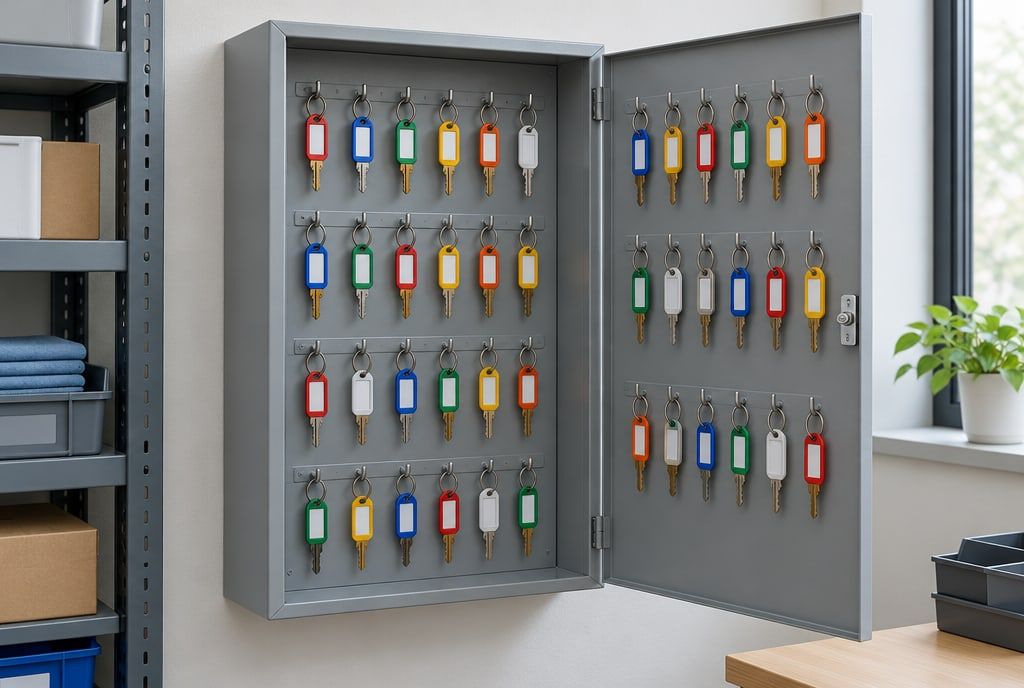
One key for the manager, the right doors for everyone else.
Keys in layers
With master keying, every lock answers to its own key and to the keys above it. A staff member’s key opens their office. A manager’s key opens that office and the others on the floor. The owner’s key opens the whole building.
The result is fewer keys on every ring, and a manager who never has to borrow a key to check a room.
Plan before cutting
We start with two lists: the doors and the people. A small office often needs only two levels, while a larger building, or one with tenants, may need more. We also ask which rooms hold cash, stock or records, since those may deserve restricted keys or a level of their own.
Planning with room to grow means new doors can join later without starting the whole system over.
When keys go missing
A lost master key doesn’t have to mean new keys for everyone. A master rekey changes the locks that key opened and, where the plan allows, leaves everyone else’s access alone. Restricted keys, which are much harder to copy, add another layer of control.
Setting one up, start to finish
Walk the building
We tour your doors with you. On-site quotes are free for businesses, and a floor plan, if you have one, speeds up the planning.
Plan the levels
Together we decide who opens what, and leave room for doors you may add.
Cylinders and keys
We rekey or replace cylinders to match the plan and cut each set of keys.
Hand over by level
Each key is tried in its doors, then handed over level by level.
The levels, from one door to every door
-
Change key
Fits a single door or lock. Most staff carry one of these.
-
Master key
Covers a set of doors, such as one floor, one department or one tenant’s suite.
-
Grand master key
Opens everything in the building. Very few people should hold one.
-
Restricted keys
Key blanks that are much harder to copy at an ordinary key counter, so you keep track of how many exist.
-
Master rekey
When a key goes missing, the affected locks get new pins while the remaining locks keep working.
-
Key control
A simple record, kept by you, of who holds which key. It turns a master rekey into a quick decision instead of guesswork.
Planning keys for a new office or building?
Call or book online for a free on-site quote.
Master key questions
How many levels does a small business need?
Often just two: individual keys for staff and one master for the owner or manager. Add a level when you have departments, tenants or more than one building.
Can doors be added later?
Usually, yes, if the system was planned with room to grow. That’s one reason we ask about your future plans at the very start.
What is a master rekey?
It’s rekeying a master-keyed building’s locks, often after a master key goes missing or someone leaves with one. The aim is to shut out the lost key while disturbing as few other keys as possible.
Can employees copy their keys?
Ordinary keys can be copied at many key counters. Restricted keys are much harder to duplicate, which helps you keep a true count of who holds what.
Do you set up master keys for property managers?
Yes. We plan systems that let managers and maintenance staff reach common areas, while each tenant keeps a private key to their own space. After a tenant leaves, only their suite needs a rekey, not the whole building.
More commercial locksmith services
Want every key to open the right doors? Let’s plan it.
Tell us about the building and how many people need keys, and we’ll set up a time to walk it with you.